







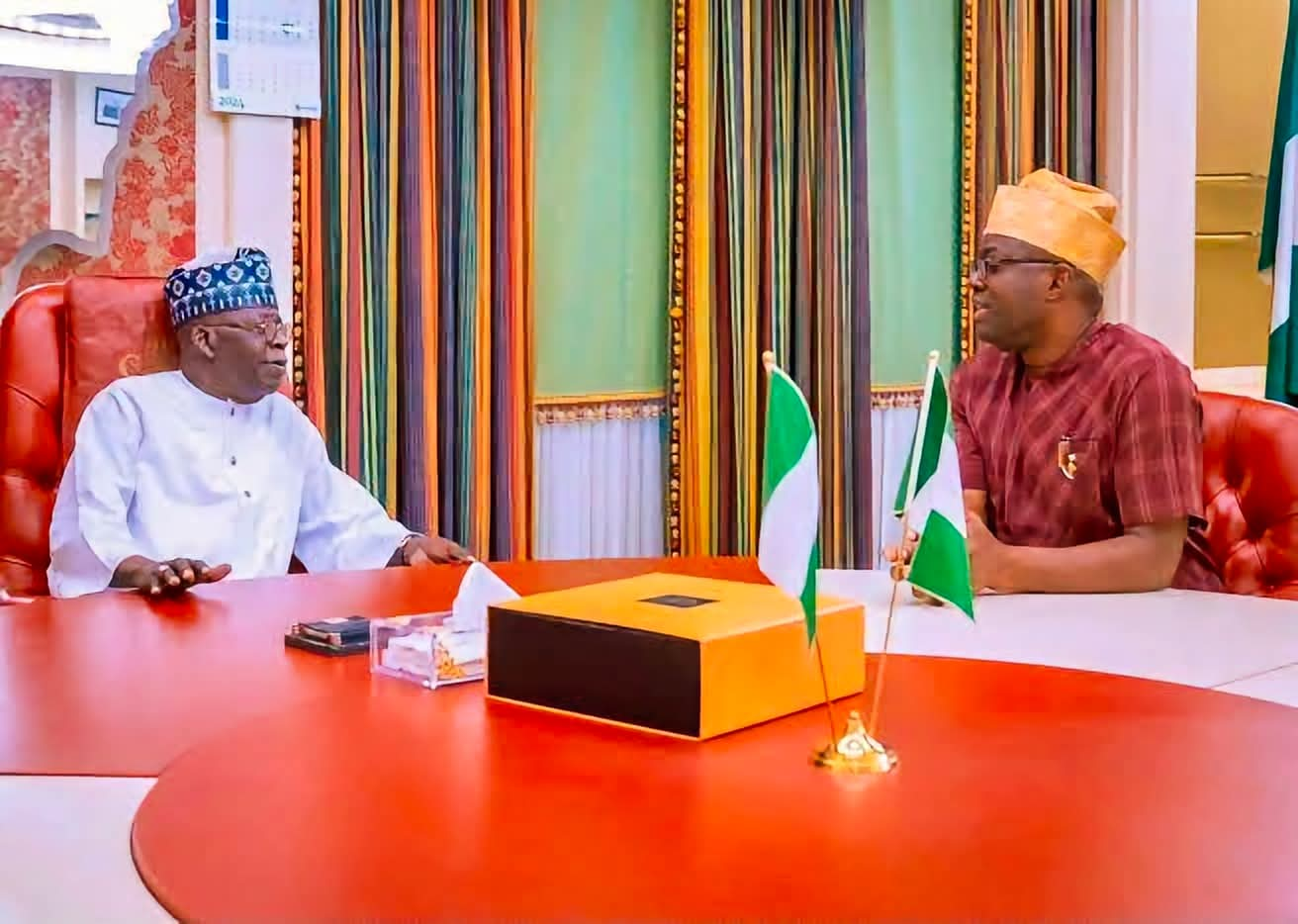
Makinde’s 2027 Bid: A Threat to Tinubu or Split for the Opposition?
By Molayo Anjorin
As Presidential bid of Oyo State Governor, Engr Seyi Makinde has introduced another dimension into the 2027 general elections dynamic in South-west. Some Analysts opine that Makinde, who is the flagbearer of the Allied Peoples Movement (APM) would reduce votes of President Bola Tinubu in the January 16, 2027 Presidential election while others see a Pretender who scheming to negotiate with the President. FactualTimes Senior Reporter, MOLAYO ANJORIN analysed the political trends.
Seyi Makinde’s 2027 presidential bid is unlikely to unseat President Bola Tinubu, but it complicates his path to re-election. By contesting in the South-West, Tinubu’s strongest base, Makinde could shrink the president’s margin there. At the same time, he risks splitting an opposition that has yet to unite behind a single challenger.
This makes him a different kind of threat, one that doesn’t necessarily need to win against the sitting leader. He only needs to cut into Tinubu’s margins and scatter the opposition vote.
Why does Makinde matter, even if he can’t win?
Makinde enters the race on the strength of his record as a two-term governor of Oyo State, but a presidential election is a far tougher contest than the ones he is used to.
Tinubu is the incumbent, backed by the APC, with a long political career and a wide network of alliances. He remains strongest in the South-West, where he built that career, so unseating him would be a near-impossible task for the current governor.
However, his influence will come from a different place. A significant share of the votes that might otherwise have gone to Tinubu could go to Makinde instead.
Why does this vote margin matter?
The South-West has given Tinubu one of his strongest electoral advantages, but the region has never been uniform.
In 2023, Tinubu carried Ogun, Oyo, Osun, Ekiti and Ondo, while Peter Obi won Lagos and Ogun. These results demonstrated that the South-West could be a region of shifting majorities even for a candidate who enjoys a significant base of support.
This gives Makinde an opening. He already holds political control in Oyo, and if he can extend his appeal beyond it, he can eat into Tinubu’s vote share without winning the whole region. The size of that dent matters because a smaller margin in the South-West forces Tinubu to make up ground in the North, South-South and South-East.
The question then is no longer whether Makinde can beat Tinubu in the region but how much of Tinubu’s advantage he can erase.
Makinde’s candidacy also creates a challenge for the opposition. The groups opposed to Tinubu have not united behind a single candidate.
Atiku Abubakar is the candidate of the ADC, Peter Obi of the NDC, and Makinde of the APM. That gives voters more options besides Tinubu, but it also means the challengers may end up competing with one another.
Where Makinde’s votes come from decides who benefits. If he draws mainly from voters unhappy with Tinubu’s government, he weakens the president. If he draws mainly from voters who would have backed Atiku, Obi or another opposition candidate, he helps the president by splitting the anti-Tinubu vote.
This is the spoiler problem.
What this means for Tinubu.
The 2023 election shows what a divided opposition can do. Tinubu won with 8.79 million votes, while Atiku and Obi, who finished second and third, polled 6.98 million and 6.10 million. Together that is 13.08 million, well above the winner’s total. But those votes were split, and a combined total on paper doesn’t guarantee that a united opposition would have won.
Still, the numbers show what a fragmented field and split opposition offers an incumbent.
This leaves Tinubu with a two-sided problem. Makinde offers a credible alternative to dissatisfied South-West voters and forces Tinubu to defend a vote share the APC would prefer to treat as safe. He also adds another strong contender to a crowded and quarrelsome opposition field, which could play into Tinubu’s hands.
The real question is what happens next?
Makinde’s bid has shifted the odds, but not the likely result. His ability to shrink Tinubu’s South-West majority will depend on whether he can draw votes beyond Oyo and be seen as a viable alternative. His wider influence will depend on where his votes come from. A heavy haul from Tinubu supporters would make the race more competitive, while one from fellow opposition voters would add another obstacle to opposition unity.
Either way, Tinubu cannot answer the challenge by appealing only to his traditional supporters. He must defend his South-West cushion while monitoring an opposition that is both fluid and potentially consolidated.
Makinde may not be the strongest hope of beating Tinubu, but he could prove to be one of the most effective vote-getters in an election where the balance of numbers is as crucial as a region’s verdict.