







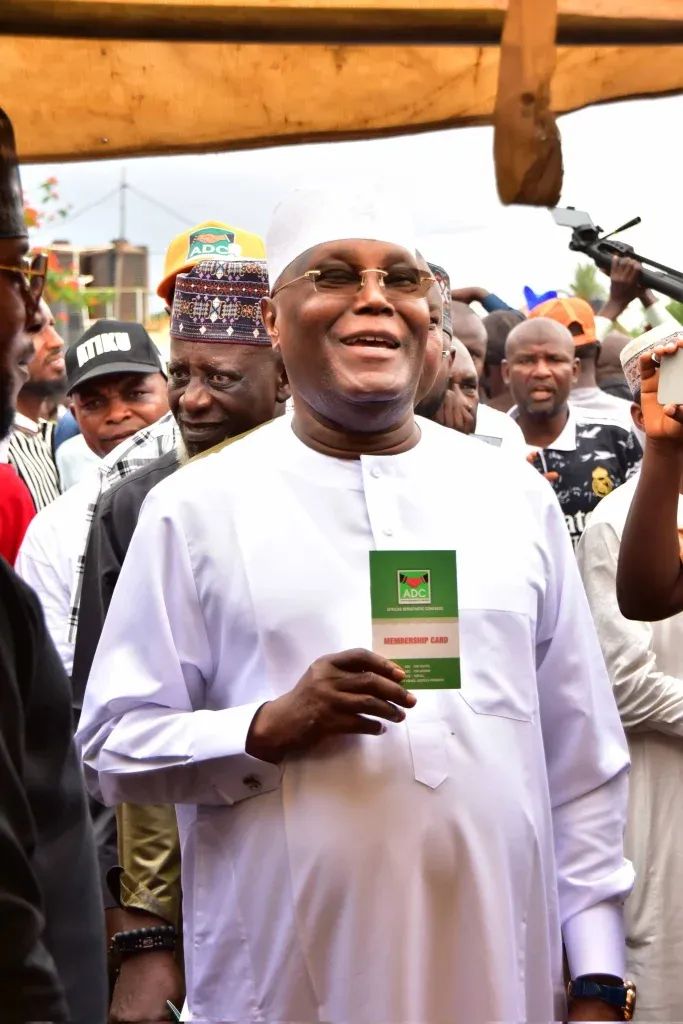
Understanding Atiku’s Fuel Subsidy Proposal
The African Democratic Congress presidential candidate in the 2027 election, Atiku Abubakar on Thursday unveiled his plan to restore petrol subsidy if he wins the 2027 presidential election.
Under his latest proposal contained in his Atiku Economic Recovery Plan 2027, the ex-vice president said his government would provide qualifying Nigerian refineries with crude oil at preferential prices, but only under strict conditions designed to ensure that the benefit reaches consumers.
He noted that the new petroleum subsidy model would shift government support from imported fuel to locally refined products.
In a statement signed by his Senior Special Assistant on Public Communication, Mr Phrank Shaibu, on Thursday, Atiku called for a detailed explanation of nearly N12tn in energy security expenses recorded by the Nigerian National Petroleum Company Limited in 2023 and 2024.
“My proposal is not to resurrect the old subsidy regime. We will move subsidy from importation to production, from middlemen to Nigerian refineries, and from unverifiable claims to verifiable barrels. The principle is simple: the subsidy will follow the barrel,” he said.
Atiku’s proposal comes against the backdrop of the consequences of the subsidy withdrawal, which had triggered a hike in transportation costs, subjecting millions of Nigerians to untold hardship as families struggle to afford basic needs.
Under the AERP model, both public and private refineries that meet prescribed requirements would be eligible for preferential crude allocations. The allocation, according to Atiku, would be based on independently verified refining capacity, efficiency, domestic supply, production performance and regulatory compliance rather than political connections.
However, access to cheaper crude would come with a corresponding obligation.
According to the plan, a refinery receiving preferential crude would be required to refine it domestically and supply an agreed quantity of petroleum products to the Nigerian market under a transparent pricing formula reflecting the value of the crude concession.
The ex-VP further argued that crude allocation, refinery intake, production yields, inventories and domestic deliveries would be reconciled so that each subsidised barrel could be traced from the point of allocation to the final consumer.
“No phantom cargoes. No fictitious imports. No unverifiable under-recoveries. No retrospective claims,” the statement read.
He added that operators that divert subsidised crude or products, falsify production records or fail to pass the prescribed benefit to consumers would lose eligibility, repay the subsidy benefit and face regulatory and legal sanctions.
A major component of the proposed model is a fixed annual spending limit.
Unlike the previous system, Atiku said the intervention would be incorporated into the federal budget, allowing the National Assembly and the public to know in advance the maximum financial exposure.
“No refinery gets unlimited support. No marketer brings government a surprise bill. No agency manufactures an under-recovery after the transaction,” he said.
Punch